Automatic Gearbox
October 16, 2026
|
Hardings Garage
Automatic Gearbox Oil Change – Protect Your Gearbox from Costly Repairs
Smooth gear changes, better performance and long-term gearbox protection.
At Hardings (Hemel Hempstead) Ltd, we understand that your vehicle’s automatic gearbox is one of its most sophisticated and expensive mechanical components.
Modern automatic gearboxes are designed to deliver smooth gear changes, comfortable driving and efficient performance.
However, many motorists don’t realise that their automatic gearbox contains specialist oil or transmission fluid that may require replacement as part of the vehicle’s maintenance schedule.
Just like engine oil, gearbox oil can deteriorate over time due to heat, use and contamination.
Replacing automatic gearbox oil at the appropriate intervals can help maintain smooth gear changes, protect internal components and reduce the risk of expensive repairs.
Why Should You Change Your Automatic Gearbox Oil?
1. Helps Protect Your Gearbox from Premature Wear
Your automatic gearbox contains numerous precision-engineered components working together to transfer power from the engine to the wheels.
Depending on the gearbox design, these may include gears, bearings, clutches, hydraulic valves and other moving components.
Gearbox oil provides essential lubrication and, in many automatic transmissions, also performs important hydraulic and cooling functions.
Over time, the oil can deteriorate and collect fine particles from normal component wear.
Replacing it when recommended helps maintain proper lubrication and reduces the risk of premature wear.
2. Helps Maintain Smooth Gear Changes
One of the main benefits of an automatic gearbox is the ability to change gears smoothly without the driver needing to operate a clutch.
As gearbox oil ages, its characteristics can change.
Contaminated or degraded transmission fluid can contribute to less consistent gear changes, hesitation or rough shifting.
Replacing the oil with the correct manufacturer-approved fluid helps the gearbox operate as designed.
3. Helps Prevent Overheating
Automatic gearboxes can generate significant heat, particularly during demanding driving conditions.
Many transmission fluids help transfer heat away from internal components.
Over time, excessive temperatures can accelerate fluid deterioration.
Regular servicing, where recommended, helps maintain the fluid’s ability to perform its intended functions.
4. Helps Protect Expensive Internal Components
Modern automatic gearboxes often contain sophisticated hydraulic control systems, electronic components and precision valves.
Some also incorporate dual-clutch assemblies, mechatronic units or torque converters.
These components can be expensive to repair or replace.
Correct fluid maintenance helps protect the parts that depend on clean, properly specified gearbox oil.
5. Helps Maintain Driving Comfort and Performance
A correctly functioning automatic gearbox should provide predictable, consistent gear changes appropriate to its design.
Maintaining the gearbox oil according to the manufacturer’s recommendations can help preserve its operating characteristics.
This is particularly important for vehicles used regularly in heavy traffic, on long journeys or for towing.
6. Helps Avoid Potentially Expensive Gearbox Repairs
Automatic gearbox repairs can be considerably more expensive than routine servicing.
Depending on the vehicle and the fault, major repairs or replacement can cost thousands of pounds.
Although an oil change cannot prevent every mechanical failure, maintaining the correct fluid can help reduce avoidable wear and protect your gearbox over the long term.
How Do You Know if Your Automatic Gearbox Oil Needs Changing?
Unlike engine oil, automatic gearbox oil is often overlooked because many vehicles do not have a straightforward gearbox oil service reminder.
Your gearbox may continue operating normally even when a scheduled oil change is overdue.
Possible signs that your gearbox needs attention include:
- Jerky or unusually harsh gear changes.
- Delays when selecting Drive or Reverse.
- Hesitation during acceleration.
- Unusual whining, humming or mechanical noises.
- Shuddering or vibration during gear changes.
- Transmission warning messages on the dashboard.
- Visible gearbox oil leaks.
- Your vehicle reaching its scheduled gearbox oil replacement interval.
Important: These symptoms do not automatically mean that an oil change will resolve the problem.
They may indicate mechanical, hydraulic or electronic faults requiring professional diagnosis.
If your gearbox is slipping badly, overheating or failing to select gears correctly, avoid continuing to drive and arrange an inspection.
How Often Should Automatic Gearbox Oil Be Changed?
There is no single oil change interval that applies to every automatic gearbox.
Replacement requirements depend on the manufacturer, gearbox design, mileage, age and operating conditions.
Some automatic gearboxes require servicing at approximately 40,000–60,000 miles, while others have longer intervals or time-based recommendations.
Certain manufacturers specify servicing every few years, even when the vehicle has covered relatively low mileage.
Other gearboxes are described as having a sealed-for-life or lifetime-fill transmission.
However, this does not necessarily mean that the oil will retain its original characteristics indefinitely.
Different gearbox manufacturers have different servicing recommendations, and any decision to change the oil should take account of the relevant technical guidance.
At Hardings, we recommend checking the specific requirements for your vehicle before carrying out a gearbox oil change.
Not sure when your gearbox oil was last changed? Our team can help investigate your vehicle’s service requirements.
Does My Automatic Gearbox Have a Filter?
Some automatic gearboxes contain filters designed to help remove contaminants from the transmission fluid.
Depending on the gearbox design, the filter may be:
- A separate, replaceable component.
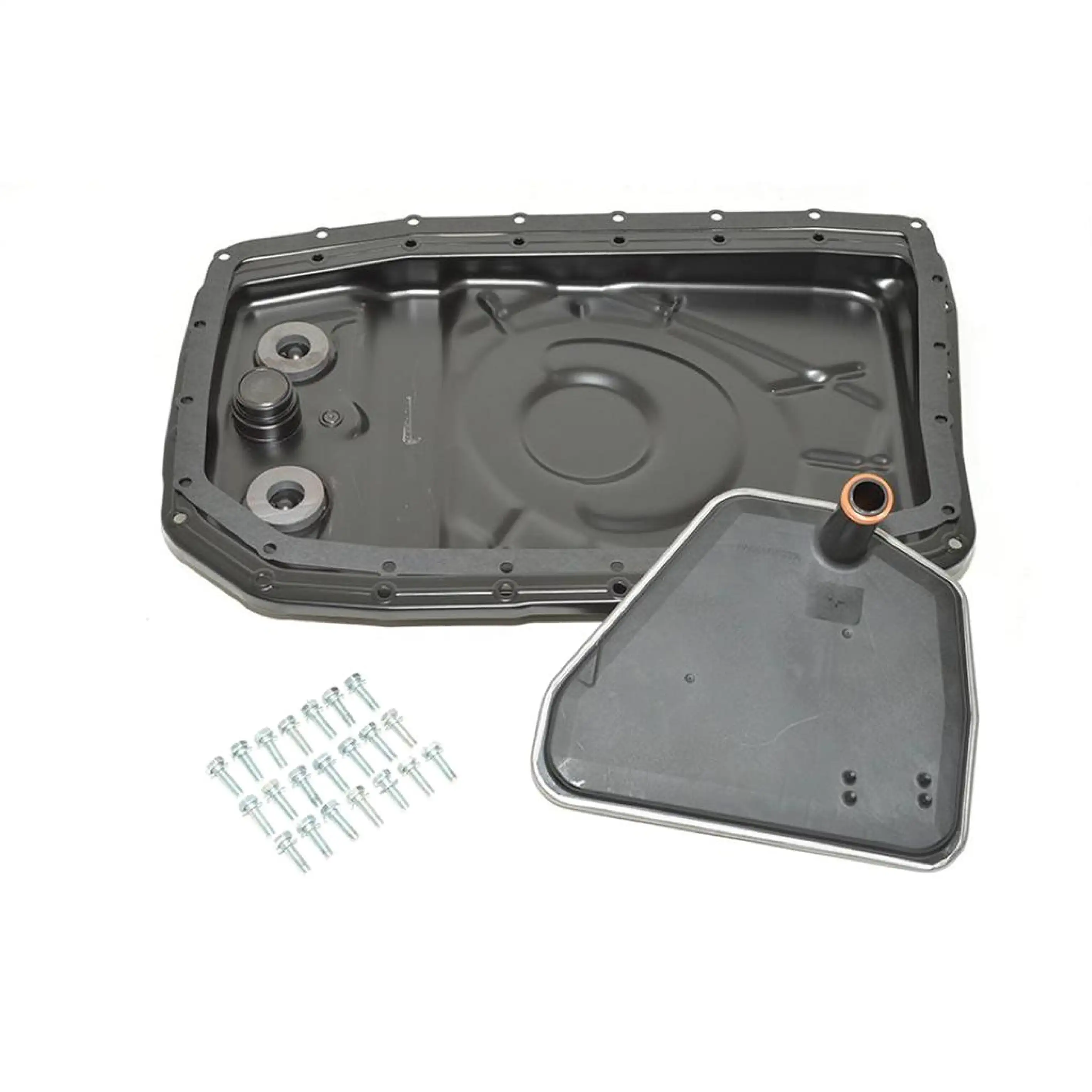
- Built into the gearbox oil pan.
- An internal component not normally replaced during routine servicing.
Where specified by the manufacturer, replacing the gearbox filter during an oil change helps maintain the cleanliness of the transmission fluid.
On certain gearboxes, replacing the filter may involve fitting a complete replacement oil pan assembly.
Our technicians can advise on the appropriate procedure for your vehicle.
Are All Automatic Gearboxes the Same?
No. Although automatic gearboxes all provide the convenience of changing gear without a conventional manual clutch pedal, there are several different types.
Traditional Automatic Gearbox (Torque Converter)
Uses a torque converter and internal gear mechanisms to provide automatic gear changes.
These gearboxes rely on specialist transmission fluid for lubrication, hydraulic operation and other important functions.
DSG / Dual-Clutch Gearbox
Uses two clutch systems to provide rapid, efficient gear changes.
Some DSG and other dual-clutch transmissions have specific oil and filter replacement schedules.
Service requirements vary significantly between wet-clutch and dry-clutch designs.
CVT (Continuously Variable Transmission)
Uses a different transmission design to deliver continuously variable gear ratios.
CVT gearboxes typically require specialist transmission fluid, and using an incorrect specification can cause serious problems.
Automated Manual Gearbox
Uses electronic or hydraulic systems to operate a gearbox based on a manual transmission design.
Its servicing requirements may be different from those of a conventional automatic gearbox.
Every gearbox is different, which is why using the correct oil and servicing procedure is essential.
Does It Matter Which Gearbox Oil Is Used?
Absolutely! Automatic gearbox oil isn’t a universal product.
Different transmissions require fluids with specific frictional characteristics, viscosity and performance requirements.
Using the wrong fluid can lead to:
- Poor or harsh gear changes.
- Clutch shudder or slipping.
- Incorrect hydraulic operation.
- Increased internal wear.
- Overheating.
- Potential gearbox damage or failure.
Some modern automatic gearboxes also require precise filling procedures at specific transmission fluid temperatures.
At Hardings, we recognise the importance of using the correct manufacturer-approved fluid and following the appropriate servicing instructions.
What Is Involved in an Automatic Gearbox Oil Change?
The exact procedure depends on the type of gearbox fitted to your vehicle.
A typical service may involve:
- Identifying the gearbox type and its service requirements.
- Inspecting the gearbox for visible leaks or damage.
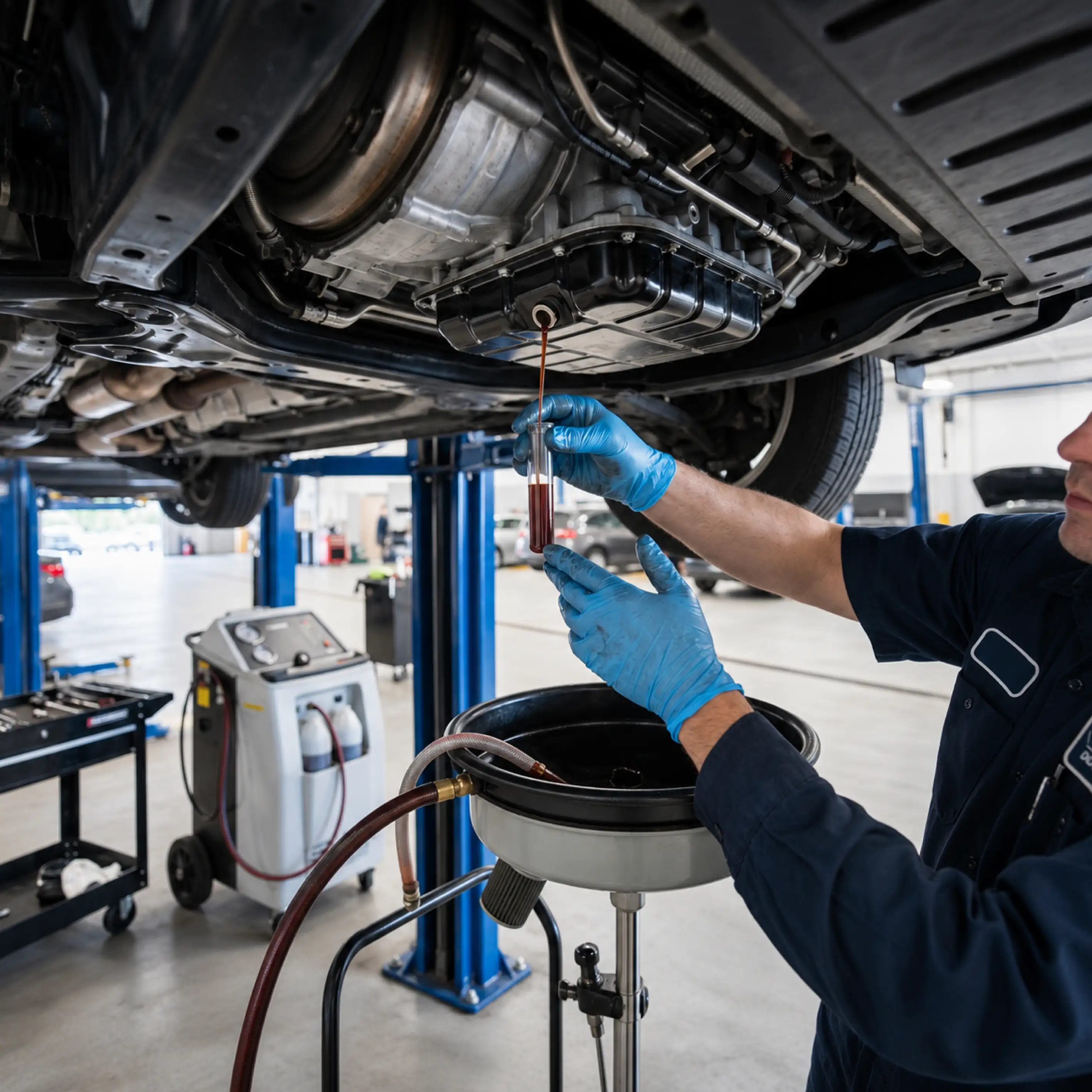
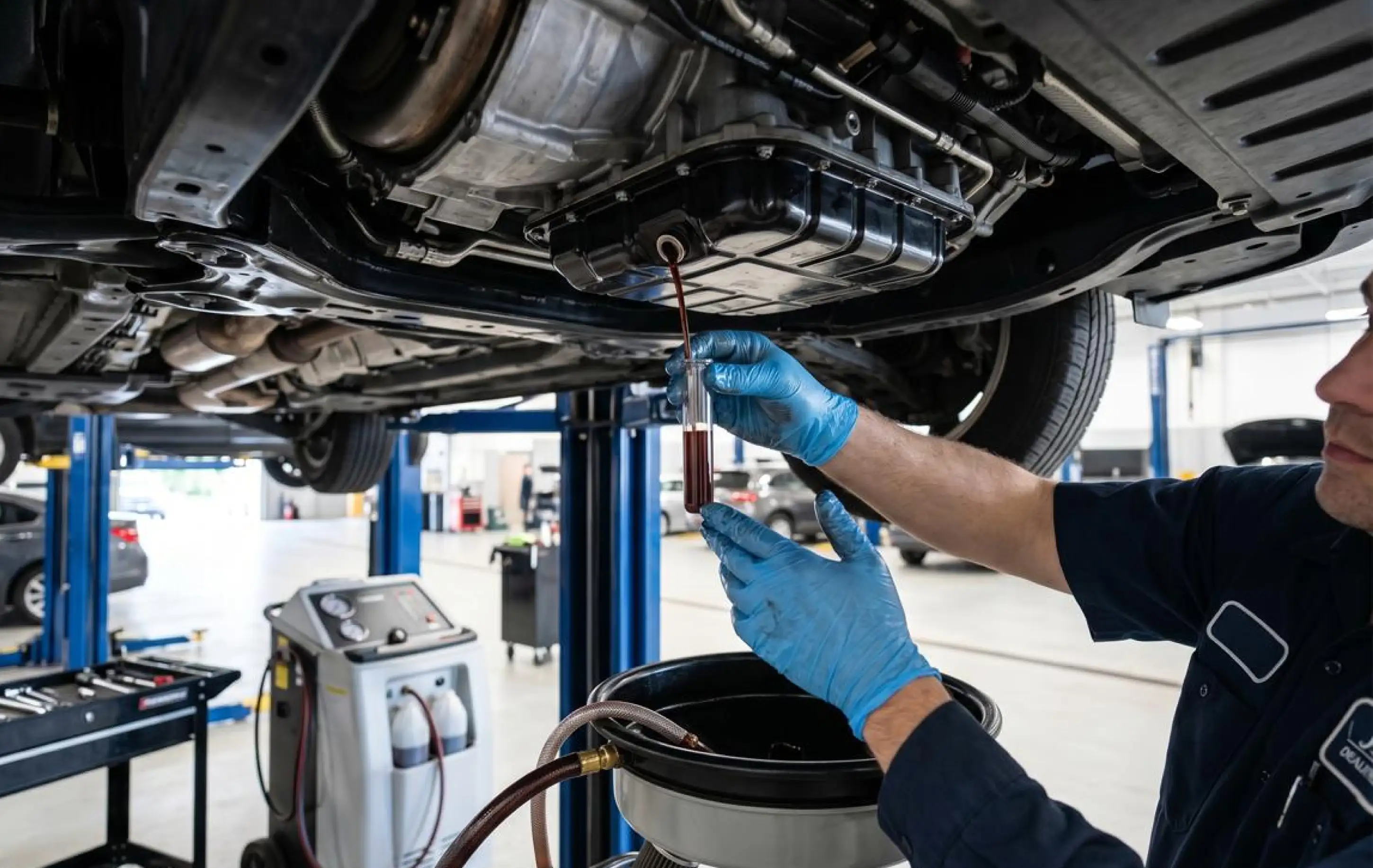
- Draining the existing gearbox oil using the prescribed procedure.
- Replacing the gearbox filter, seals or oil pan where required.
- Refilling with the correct specification and quantity of transmission fluid.
- Checking or setting the oil level according to the manufacturer’s temperature and operating requirements.
- Checking gearbox operation and for any leaks after servicing.
Certain gearboxes require specialist diagnostic equipment or additional procedures.
The service carried out will depend on the gearbox fitted and the manufacturer’s technical instructions.
Gearbox Oil Change vs Gearbox Flush – What's the Difference?
Customers sometimes hear the terms gearbox oil change and gearbox flush and assume they mean the same thing.
However, these are different procedures.
Automatic Gearbox Oil Change
Normally involves draining the oil that can be removed through the specified service procedure and replacing it with fresh, correctly specified transmission fluid.
A filter may also be replaced where required.
Automatic Gearbox Flush / Fluid Exchange
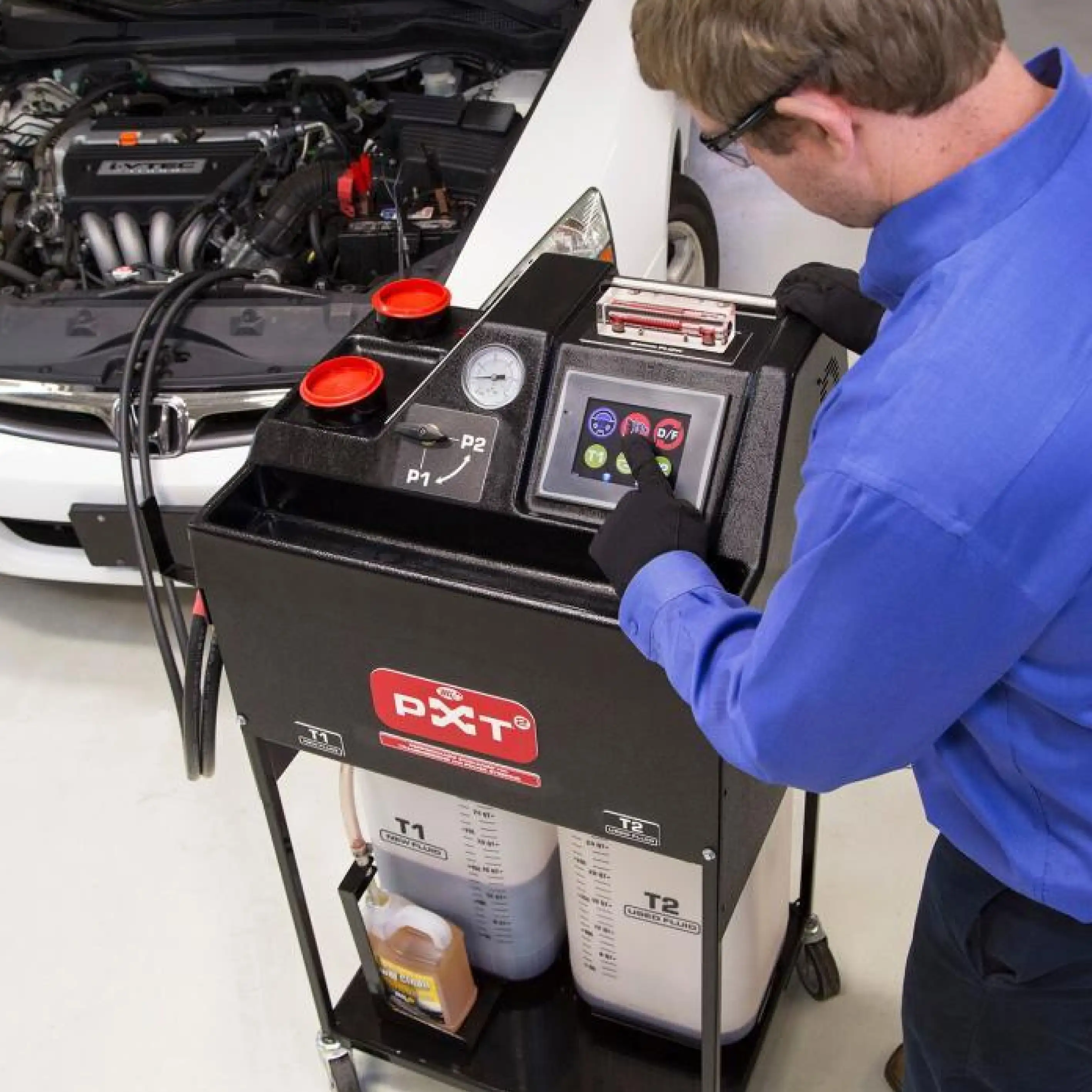
Uses additional equipment or procedures intended to exchange more of the existing transmission fluid.
Not every gearbox is suitable for this process, and it should only be carried out when compatible with the manufacturer’s guidance and the gearbox’s condition.
On older or high-mileage vehicles with unknown maintenance histories, additional assessment may be advisable before undertaking transmission servicing.
At Hardings, we believe in recommending the procedure appropriate for the individual vehicle rather than assuming every gearbox requires the same treatment.
What Happens if You Don't Change Your Gearbox Oil?
Where gearbox oil replacement is required, repeatedly delaying maintenance may contribute to:
- Deterioration of lubrication and cooling properties.
- Contamination from internal component wear.
- Increased friction and component deterioration.
- Rough or inconsistent gear changes.
- Premature wear of certain hydraulic or mechanical components.
- Expensive gearbox repairs in severe cases.
These issues will not necessarily appear immediately when an oil change becomes overdue.
However, maintaining the gearbox in accordance with the appropriate recommendations can help protect its long-term reliability.
Can Changing Gearbox Oil Fix a Faulty Automatic Gearbox?
Not necessarily. If a gearbox is experiencing problems, an oil change may be helpful where degraded or incorrect fluid is identified as a contributing factor.
However, mechanical damage, worn clutches, faulty sensors and electronic or hydraulic problems will generally require further diagnosis or repair.
A gearbox oil change is primarily preventative maintenance, not a guaranteed repair for an existing fault.
If your automatic gearbox is already displaying problems, our team can advise on the appropriate next steps.
Is Automatic Gearbox Oil Checked During an MOT?
An MOT test checks various safety and roadworthiness-related aspects of your vehicle.
However, it does not include routine inspection of the condition or remaining service life of your automatic gearbox oil.
A vehicle can therefore pass its MOT while its gearbox oil is overdue for replacement.
An MOT pass does not replace regular mechanical servicing.
Why Choose Hardings?
At Hardings (Hemel Hempstead) Ltd, we’ve been looking after motorists since 1946.
With decades of motor industry experience, we understand how important preventative maintenance is in keeping vehicles running reliably.
As an independent garage, we service and maintain all makes and models of cars and light commercial vehicles.
Our experienced team can help identify the gearbox fitted to your vehicle, check the relevant servicing requirements and advise whether an automatic gearbox oil change is recommended.
We’ll explain the work involved and provide a clear quotation before carrying out any additional work.
Protect Your Automatic Gearbox Before Problems Develop
Your automatic gearbox is one of the most complex and expensive components in your vehicle.
Keeping it correctly maintained can help preserve smooth gear changes, protect internal components and reduce the risk of avoidable repairs.
Not sure whether your automatic gearbox is due for servicing?
Contact Hardings (Hemel Hempstead) Ltd with your vehicle registration number and current mileage.
Our friendly team can help check the recommended gearbox maintenance requirements and provide a competitive quotation for suitable servicing.
Hardings – Looking After You and Your Car Since 1946.