Battery Testing
October 16, 2026
|
Hardings Garage
Car Battery Health Checks – Don't Get Caught Out with a Flat Battery
Your car battery might be working today – but will it start your car tomorrow?
At Hardings (Hemel Hempstead) Ltd, we understand how frustrating it can be when your car won’t start, particularly when you’re heading to work, taking the children to school or setting off on an important journey.
Your vehicle’s battery is one of its most important electrical components. It provides the power needed to start your engine and supports the electrical systems throughout your vehicle.
However, like many other parts of your car, batteries deteriorate with age and use.
A battery can appear to be working perfectly normally, yet gradually lose its ability to hold sufficient charge or deliver the power required to start your engine.
A simple battery health check can help identify a weakening battery before it leaves you stranded.
Why Should You Have Your Car Battery Checked?
1. Helps Prevent Unexpected Breakdowns
One of the most common causes of vehicle breakdowns is a flat or failing battery.
A weakening battery may continue starting your car for weeks or months before finally failing, sometimes without much warning.
Having your battery tested can help identify deterioration before it becomes a problem.
Although no test can guarantee that a battery won’t fail unexpectedly, regular checks can significantly reduce the risk of being caught out.
2. Batteries Deteriorate with Age
Car batteries have a limited service life.
Over time, the chemical processes inside the battery cause it to lose some of its ability to store energy and deliver starting power.
As a general guide, many conventional car batteries last approximately 3–5 years, although some last considerably longer.
Battery life depends on factors such as driving habits, weather conditions, electrical demands and the vehicle’s charging system.
Even if your battery appears to be functioning normally, it may be worth checking its condition as it gets older.
3. Cold Weather Can Expose a Weak Battery
Winter is one of the most demanding times for your vehicle’s battery.
Cold temperatures reduce the battery’s ability to deliver electrical power, while a cold engine can require more effort to start.
At the same time, motorists often use additional electrical equipment, including heated windows, headlights, heaters and windscreen wipers.
A battery that coped perfectly well during the summer may struggle when temperatures drop.
Having your battery checked before winter could help prevent an inconvenient breakdown on a cold morning.
4. Short Journeys Can Affect Battery Charge
If you regularly use your car for short journeys, your battery may not have enough time to recover the energy used during starting.
This is particularly relevant for vehicles that are used infrequently or spend long periods parked.
Repeatedly operating with a low state of charge can shorten the life of some batteries.
A battery health check can help distinguish between a battery that simply needs charging and one that is deteriorating.
5. Modern Cars Rely on Their Batteries More Than Ever
Modern vehicles contain numerous electronic systems that rely on a stable electrical supply.
These can include:
- Engine management systems.
- Electronic safety equipment.
- Central locking and security systems.
- Infotainment and navigation.
- Electric windows and seats.
- Stop-start technology.
- Various sensors and control modules.
A weak battery can sometimes contribute to electrical problems, warning messages or unreliable operation.
Maintaining a healthy battery helps support the correct functioning of your vehicle’s electrical systems.
6. Helps Avoid Inconvenience and Additional Costs
Discovering your battery has failed when you need your car can be extremely inconvenient.
You may face recovery charges, emergency battery replacement costs or disruption to your plans.
Identifying a weak battery during routine maintenance gives you the opportunity to consider replacement before it fails.
How Do You Know if Your Car Battery Is Failing?
There are several warning signs that your battery may be getting weaker.
These include:
- The engine turning over more slowly than normal.
- Difficulty starting, particularly on cold mornings.
- Clicking noises when trying to start the engine.
- Stop-start technology no longer operating as frequently as expected.
- Electrical systems behaving unusually.
- Dashboard battery or electrical warning messages.
- A battery that frequently needs jump-starting.
- Your battery being several years old.
Important: These symptoms can also be caused by charging-system faults, starter motor problems, electrical drains or other vehicle issues.
A professional battery test helps identify whether the battery itself is responsible.
What Is Involved in a Battery Health Check?
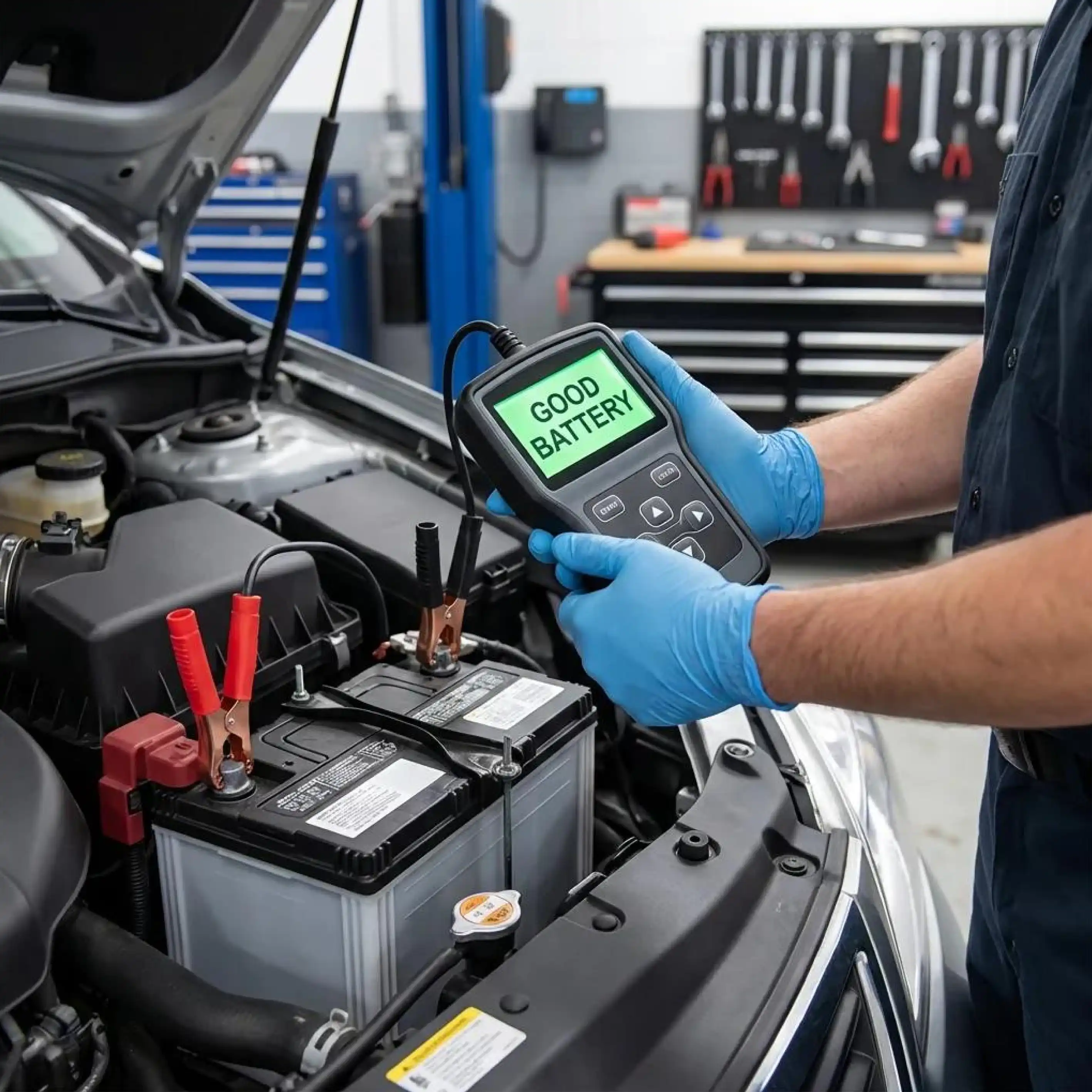
A battery health check is designed to assess the condition and performance of your vehicle’s battery.
Depending on the vehicle and the equipment used, this may include:
Battery Voltage Check
Measures the battery’s voltage to help assess its state of charge.
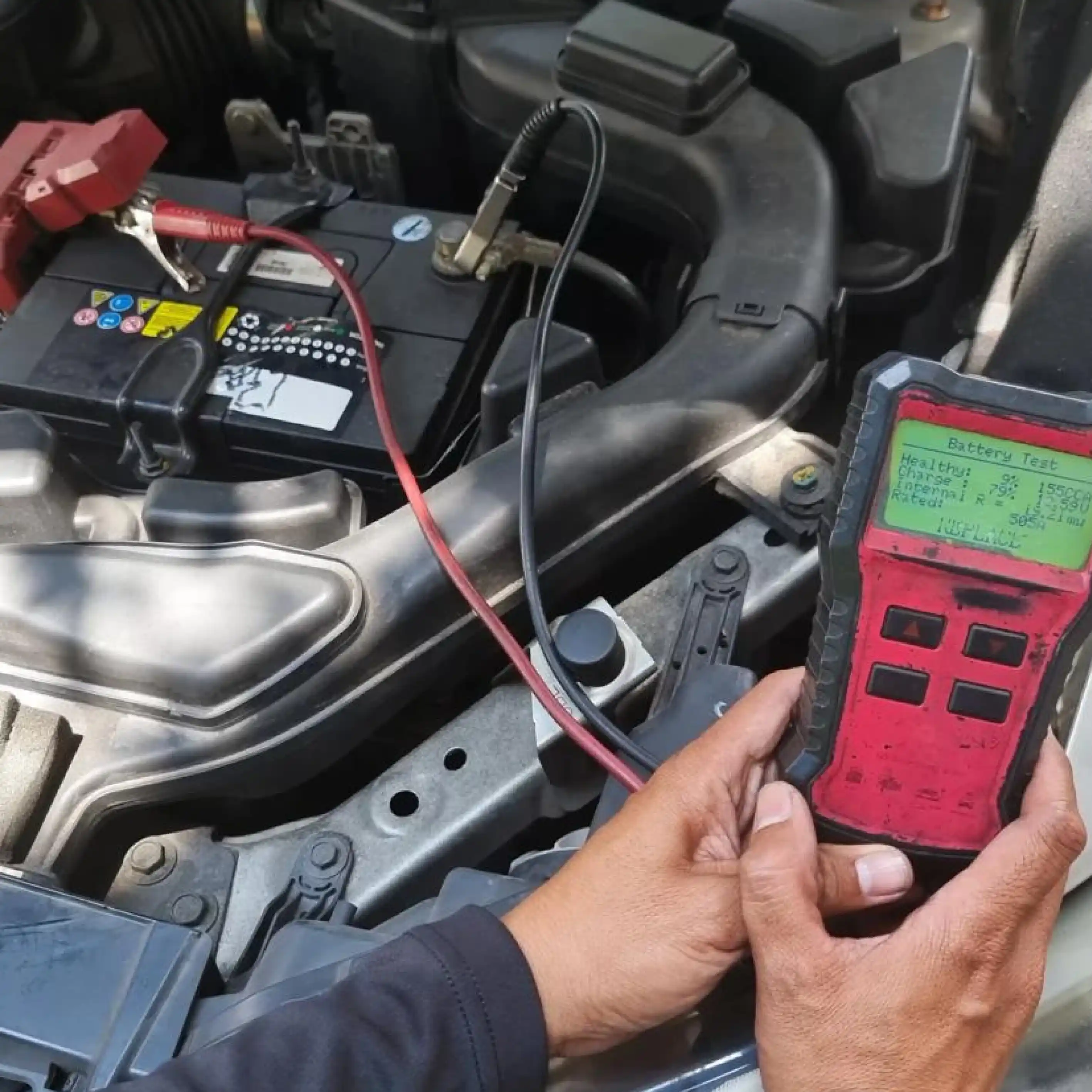
Battery Health and Starting Performance Test
Uses specialist battery testing equipment to assess the battery’s condition and its ability to deliver the power required to start the engine.
Cold Cranking Amps (CCA) Assessment
Checks the battery’s ability to provide starting power, particularly important during colder weather.
Battery Terminal Inspection
Checks for loose connections, corrosion or visible damage around the battery and its connections.
Charging System Check
Where appropriate, checks whether the vehicle’s alternator or charging system is operating correctly.
A healthy battery can still become discharged if the charging system isn’t working properly.
At Hardings, our technicians can explain the test results and advise whether your battery requires charging, further investigation or replacement.
How Often Should Your Battery Be Checked?
There is no single testing interval that applies to every vehicle.
However, we recommend considering a battery health check:
- As part of routine vehicle servicing.
- Before the colder winter months.
- When your battery reaches approximately three years of age.
- If your vehicle is used mainly for short journeys.
- If you have experienced starting difficulties.
- Before a long journey or holiday.
- If your vehicle has been standing unused for an extended period.
A battery doesn’t need to have failed before it can be tested.
Preventative checks can provide useful information about its condition and help you plan ahead.
Does a Battery Need Replacing if It's Flat?
Not necessarily. A flat battery and a failing battery are not always the same thing.
Flat or Discharged Battery
A battery may become discharged because the vehicle has been standing unused, lights have been left on or it has not received sufficient charge.
If the battery remains in good condition, it may simply need recharging.
Weak or Deteriorating Battery
An ageing battery may no longer be able to store sufficient energy or deliver the power required to start the engine reliably.
In this situation, replacement may be the most appropriate solution.
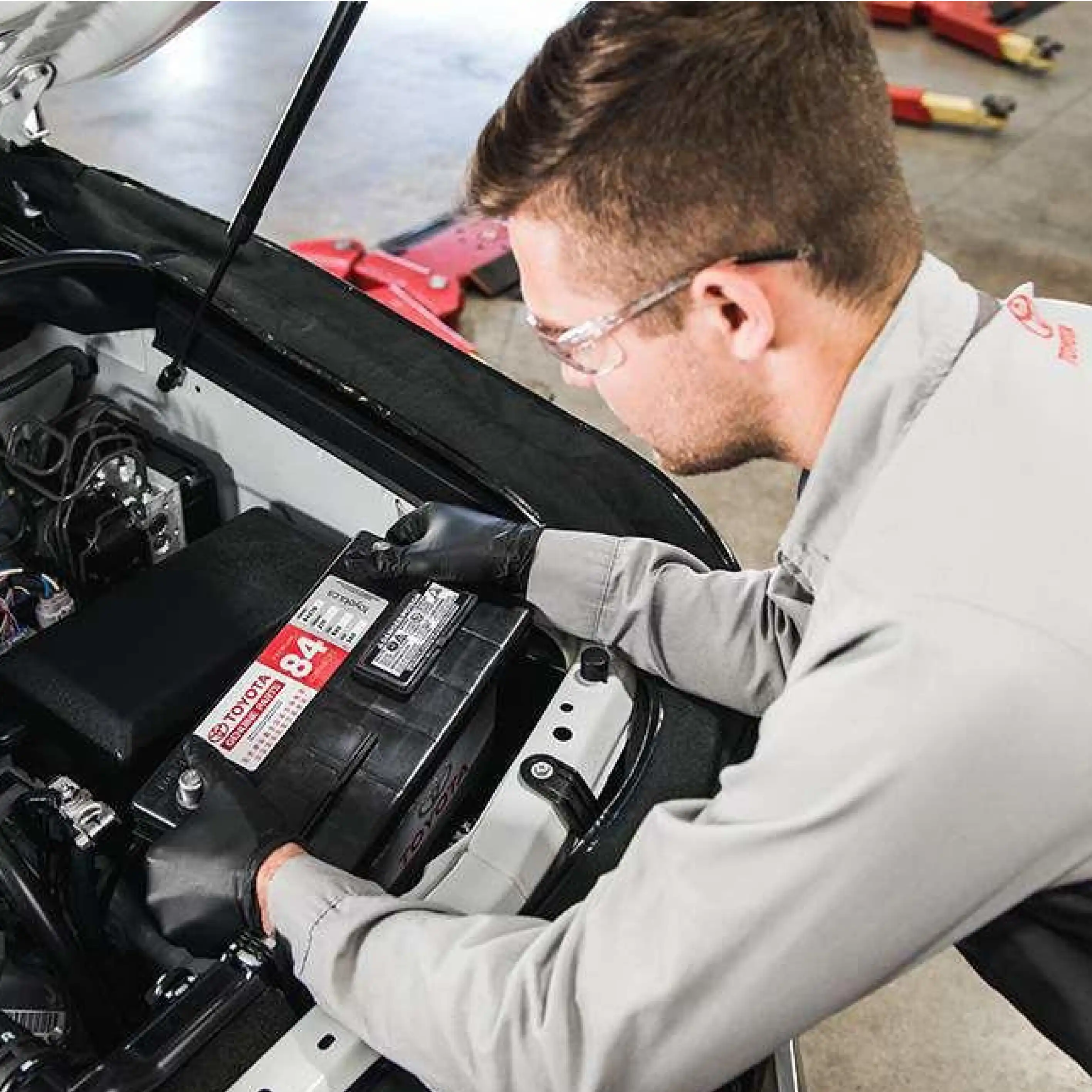
At Hardings, we believe in testing the battery before recommending replacement wherever practical.
What Is the Difference Between Standard, EFB and AGM Batteries?
Not all car batteries are the same.
Modern vehicles use different battery technologies depending on their electrical requirements.
Standard Lead-Acid Battery
Commonly fitted to many conventional vehicles without advanced stop-start systems.
EFB (Enhanced Flooded Battery)
Designed to cope with more demanding operating conditions and frequently used in vehicles equipped with stop-start technology.
AGM (Absorbent Glass Mat) Battery
Designed for higher electrical demands and commonly used in vehicles with more advanced stop-start and energy management systems.
Fitting the incorrect type of battery can affect performance, reliability and battery life.
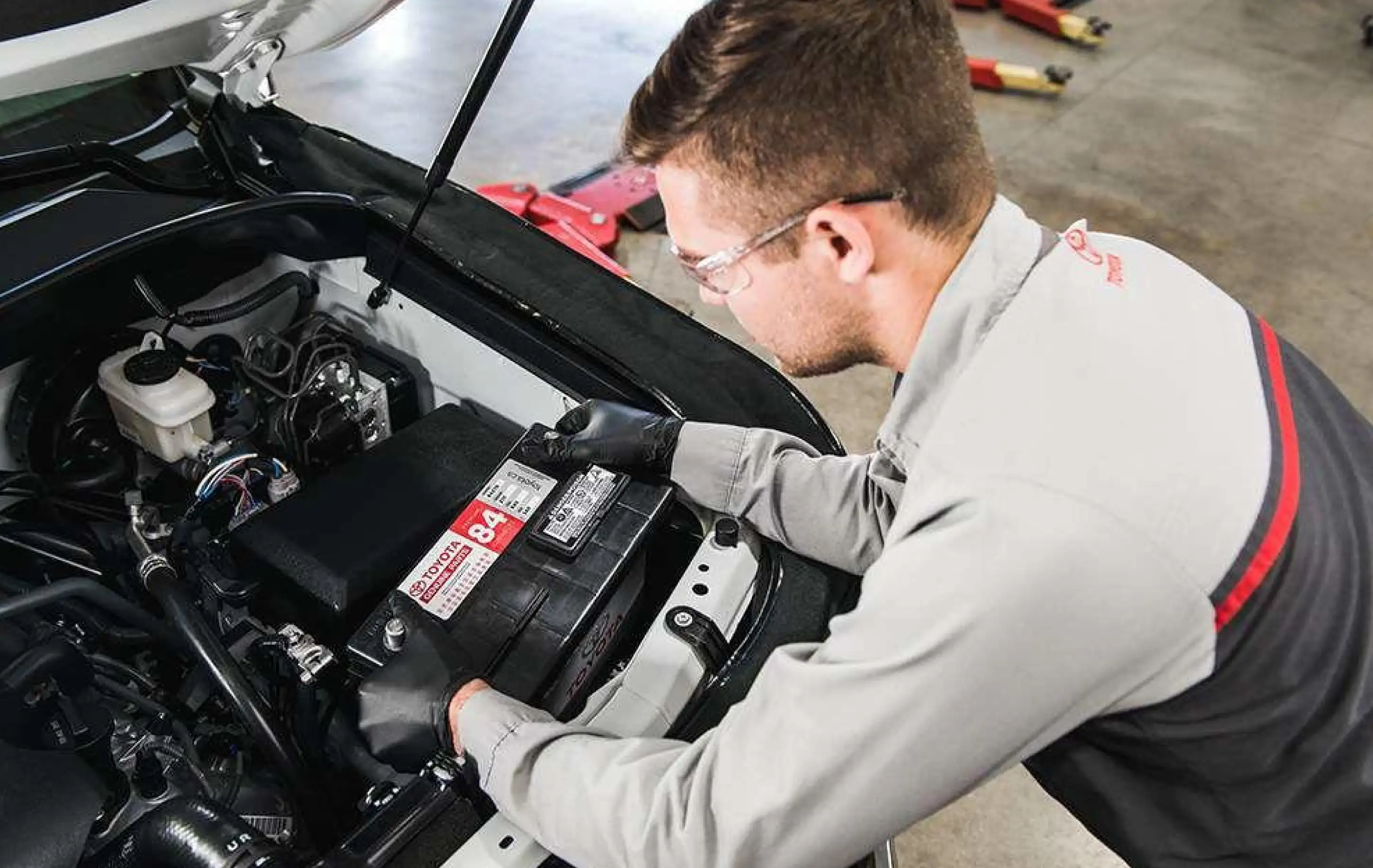
Some modern vehicles also require the replacement battery to be registered or coded to the vehicle’s battery management system.
At Hardings, we can identify the appropriate battery specification for your vehicle and advise on the correct replacement procedure.
Can a Weak Battery Affect Stop-Start Technology?
Yes. Many modern stop-start systems monitor battery condition and state of charge.
If the vehicle determines that the battery does not have sufficient charge or starting capability, it may temporarily disable the stop-start function to help preserve enough power for restarting.
However, stop-start systems can also be affected by engine temperature, air conditioning demand, electrical loads and other operating conditions.
If your stop-start system has stopped working, a battery health check can help determine whether battery condition is contributing to the problem.
Is My Battery Checked During an MOT?
An MOT test includes certain checks relating to the battery’s security, condition and associated electrical safety.
However, a routine MOT does not include a full battery health or starting-capacity test.
This means your vehicle can pass its MOT even if the battery is becoming weak and may struggle to start the engine.
A battery health check is therefore a useful additional maintenance check, particularly on older vehicles.
What Happens if Your Battery Fails?
If your battery cannot deliver enough power to start the engine, you may experience:
- A vehicle that won’t start.
- Repeated clicking when turning the key or pressing the start button.
- Electrical systems shutting down or behaving unexpectedly.
- The need for roadside assistance.
- The inconvenience of an unexpected battery replacement.
In some vehicles, low battery voltage may also trigger temporary warning messages or electronic faults.
Although replacing a failed battery may be relatively straightforward, the inconvenience of being stranded can be considerable.
Why Choose Hardings?
At Hardings (Hemel Hempstead) Ltd, we’ve been looking after motorists since 1946.
With decades of motor industry experience, we understand the importance of maintaining your vehicle’s reliability and identifying problems before they lead to breakdowns.
As an independent garage, we service and maintain all makes and models of cars and light commercial vehicles.
Whether your car is struggling to start, your stop-start system isn’t working correctly or you simply want reassurance before winter, our experienced technicians can assess your battery’s condition.
If a replacement battery is required, we can advise on the correct specification for your vehicle.
We’ll explain the results of any testing and provide a quotation before carrying out additional work.
Don't Wait Until Your Car Won't Start!
Your battery works every time you start your vehicle, but its condition is something many motorists rarely think about.
A simple battery health check can help identify signs of deterioration, reduce the risk of unexpected breakdowns and give you greater confidence in your vehicle’s reliability.
Not sure how old your battery is or whether it’s still performing properly?
Contact Hardings (Hemel Hempstead) Ltd with your vehicle registration number, and our friendly team can arrange a battery health check and advise whether any further attention is needed.
Hardings – Looking After You and Your Car Since 1946.